
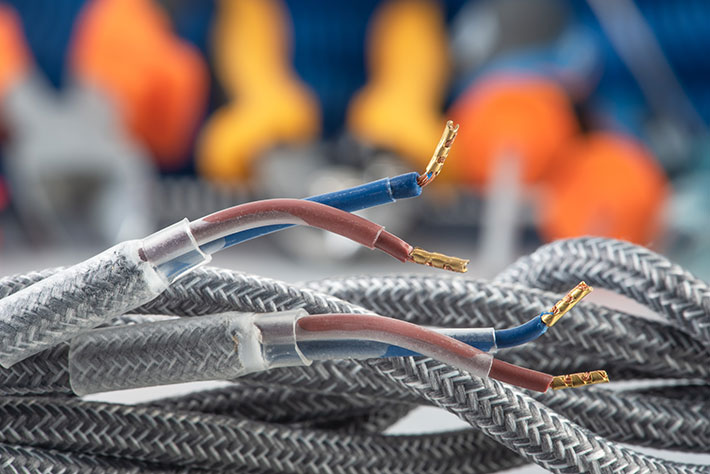
Any business, regardless of industry, should have a firm grasp on their electrical systems. You may not even be familiar with the types of appliances that use low-voltage cables and wires. Some of these are in plain sight, such as fire alarms and security systems. Others, such as Wi-Fi networking, work in the background to ensure you and your employees can perform their job duties.
Many of you have questions about low-voltage wire and cable products.
Based on our 20 years of experience in the industry, we have the answers below.
How do Low-Voltage Cable and Wires Work?
To explain low-voltage cables and wires is to explain the 21st century and its reliance on microtechnology. These cables are meant to handle only a sliver of what large-scale, high-voltage cables can—and for good reason. You wouldn’t want to overload these small conduits with 1000 volts of energy; it would destroy them. They are only meant to carry up to 48V at one time. Structured cabling is the way to refer to a low-voltage wire system. Because it is separate from a home or business’s main electrical system, it can transfer data at much higher speeds. That is why they are used for systems such as smart thermostats, alarms, and Wi-Fi where even nanoseconds are considered.
Are There Different Types of Low-Voltage Cables?
Low-voltage cables come in many different forms for many different functions. The most common are coaxial cables. You may have seen these used for your TV or router. Fiber Optic is another name thrown around. They are a much more expensive type of cable used for similar uses as coaxial cables. Instead of electricity, transmission occurs through light. However, you can’t use fiber optic wires for cable internet. You need fiber internet which requires a specialist especially because there are governances they need to adhere to. Other types offered by Onsite are fire alarm cables, access control cables, and Cat cables.
What Are Some Industries That Use Low-Voltage Cables
Most industries nowadays use some form of low-voltage cabling because it is so advanced and innovative. Any office space, whether it be for a pharmaceutical or software company, is reliant on these types of cables for their lifestyle. One example is in hospitals. In hospitals, low-voltage cabling is crucial for powering and connecting various medical devices, ensuring seamless communication between staff and systems. This cabling supports critical applications such as patient monitoring systems, telemedicine, and nurse call systems, enabling rapid response to patient needs.
Additionally, the cabling facilitates data transfer for electronic health records (EHR) and helps maintain connectivity for vital equipment, enhancing patient care and safety.
Who Do I Contact to Buy Low-Voltage Cables?
You should seek businesses that specialize in structured cabling configurations. As we stated earlier, low-voltage cables follow different rules than standard electrical wiring.
Onsite Wire & Cable + Telinks has the extensive inventory needed to complete any large-scale project. Choosing a provider with expertise in low-voltage systems ensures that the cabling is not only fitted correctly but also scalable to your business needs.
Even if you are brand-new to the idea of low-voltage cabling, partnering with us means investing in the future of connectivity. If you are a private contractor or business looking for the best low-voltage cabling warehouse in the Mid-West and East Coast, connect with us online today and speak with one of our talented wire and cable professionals.