
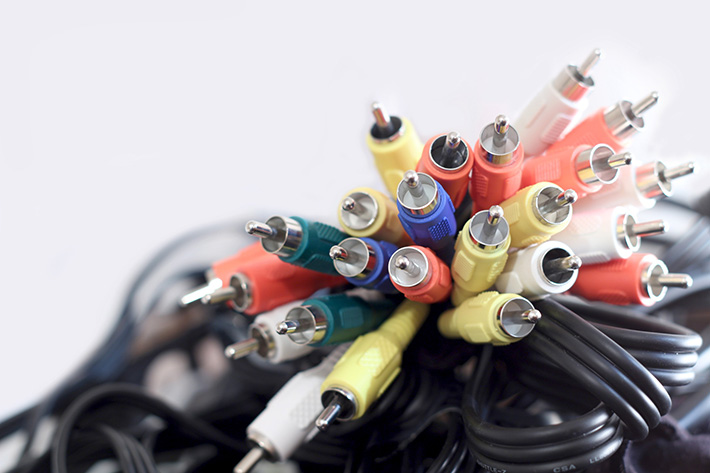
What if you could see inside the tiniest gadgets that power your home? How does that energy circulate? You can most likely thank low-voltage wiring. These unassuming cables play an important role in sustaining the dance of electrons that power the conveniences our hyper-connected world often takes for granted.
Low-voltage wiring is defined by an output of 50 volts or less, making it a safer and more versatile solution for most modern applications.
Examples of common low-voltage wiring include Cat 5/Cat 6 cables, coaxial cables, and fiber optics, which prove ideal in a number of your favorite smart technologies. The advantages of utilizing low-voltage wiring and cabling are substantial—safety being number one, followed by energy efficiency, and scalability.
Electrical contractors seeking comprehensive insights into low-voltage cable networks should seek out our services at Onsite Wire & Cable + Telinks. Our distribution sites deal with low-voltage wires, making us the premier partner for many small and large businesses across the United States. Trust us when we say that our 20 years in the industry are unmatched.
An Overview of Low-Voltage Wiring
Low-voltage wiring involves the installation and use of wiring systems that operate at a much lower frequency than their high-voltage counterparts. Due to the lower electricity usage, these cables are often thinner and more delicate. Specific regulations govern low-voltage wiring, with one notable guideline stipulating that unshielded low-voltage wires must maintain a certain distance from high-voltage wires to avert potential hazards.
Primary Uses of Low Voltage Wiring
Low voltage wiring finds extensive application across various industries and settings. Some primary uses include:
1. Home Automation Systems: Have you ever wanted to “smart proof” your home? Low-voltage wiring is essential for these technologies. Smart lighting, security systems, thermostats, and audio-visual equipment all run on this type of wiring.
2. Communication Networks: Telephone lines and computer networks require precise wiring, which is why low-voltage cables do the job perfectly.
3. Security Systems: Most security networks run on low-voltage wiring. Its components allow for surveillance cameras and alarm systems to function precisely.
The Benefits of Low Voltage Wiring and Cabling
One of the primary benefits of low-voltage wiring is enhanced safety. With lower electrical potential, the risk of electrical shock and fire hazards is significantly reduced, making it safer for both installation and operation. As previously mentioned, low-voltage systems generally consume less power, contributing to increased energy efficiency.
For businesses, this means having more money left over for other maintenance needs. For homeowners, they can feel better about doing something for the environment. Finally, low-voltage systems are easily scalable, allowing for the addition or modification of components without significant infrastructure changes. This scalability is particularly beneficial in commercial settings where technology requirements are ever-changing.
Low-voltage wiring products have become indispensable in the contemporary world, facilitating connection with one another, data exchange, and safety. Its prominence in our everyday lives will only continue to become more evident as our electronic systems transition from large grids toward an economical energy model.
Invest today with Onsite Wire & Cable + Telinks. No one does low-voltage cabling quite like us. Our experts have every type of cable imaginable for your residential or commercial needs, including custom cable design for more complex engineering feats. We do local and nationwide delivery with locations in both the Mid-West and East Coast. Let’s connect today!